As robot testing moves out of fixed task lists and into open-world settings, the scarce asset becomes the recorded ground truth that defines what success was.
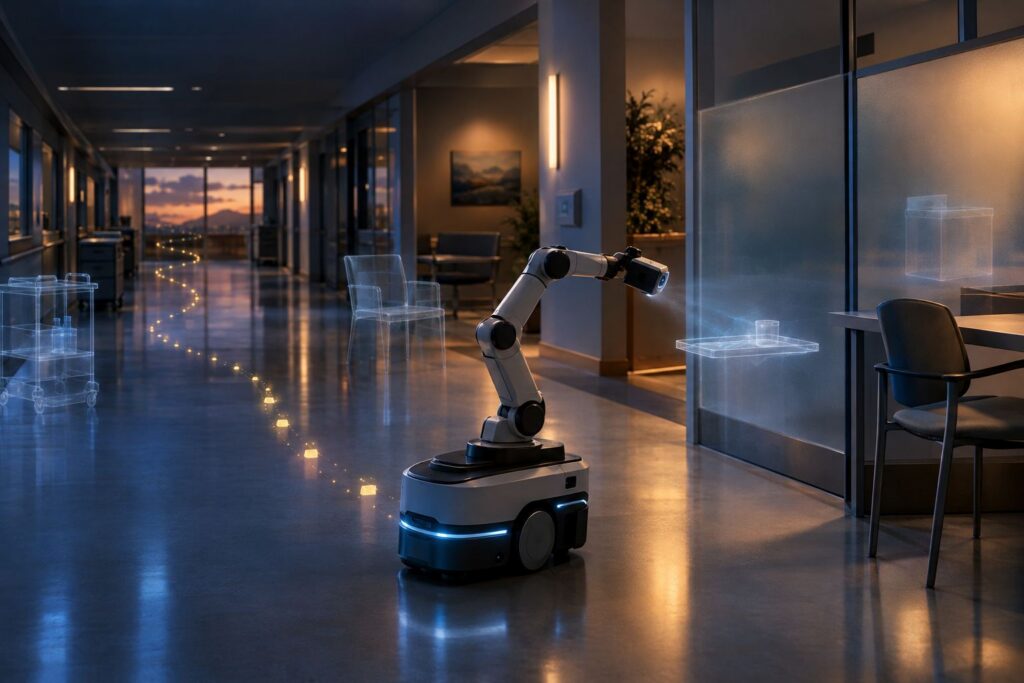
Ask a robotics team how capable their system is and you will get a number from a test the team chose. For years that was a reasonable arrangement, because the test and the deployment looked alike: a known bench, a known set of objects, a task list written in advance. The conversation in the field right now is about what happens when you take the fence down, and a benchmark called RobotAgentBench is a useful marker of where that conversation has reached, because it tries to score robots on open-ended work in ordinary settings instead of on a fixed menu of chores.
A Report Card With No Answer Key
In a closed setting, scoring is nearly automatic. The gripper closed on the correct object or it did not, the drawer is open or shut, and the harness can decide without anyone watching. Open-world tasks break that comfort. Instructions arrive in ordinary language, the objects are ones the system has not met, the kitchen is somebody’s actual kitchen, and there are several defensible ways to do the job and many more ways to half do it.
Someone has to decide what counts. That decision is not a modelling problem, it is a recording problem. Underneath every open-world benchmark sits a corpus: scenes captured, episodes segmented into steps, instructions written down in the words a person would really use, outcomes judged by someone who knows what the task was supposed to achieve. A leaderboard is only as honest as that record, and the record is slow, physical, human work.
What I Would Watch As The Tests Open Up
I think the most valuable output of open-world benchmarking is not the ranking. It is that a field is forced to write down, in plain terms, what doing the job actually means, task by task, including the messy middle where a robot got most of the way there. That written-down judgment is more durable than any single model generation.
I find the adjudication harder than the task generation. Inventing open-ended tasks is easy now; agreeing on whether an attempt succeeded, consistently, across thousands of episodes and dozens of people, is not. What I would watch is whether the annotation standards behind these benchmarks are published and stable enough that two independent teams scoring the same footage land in the same place. Without that, a rising score tells you about the scorer rather than the robot.
The Judgment Layer Under The Leaderboard
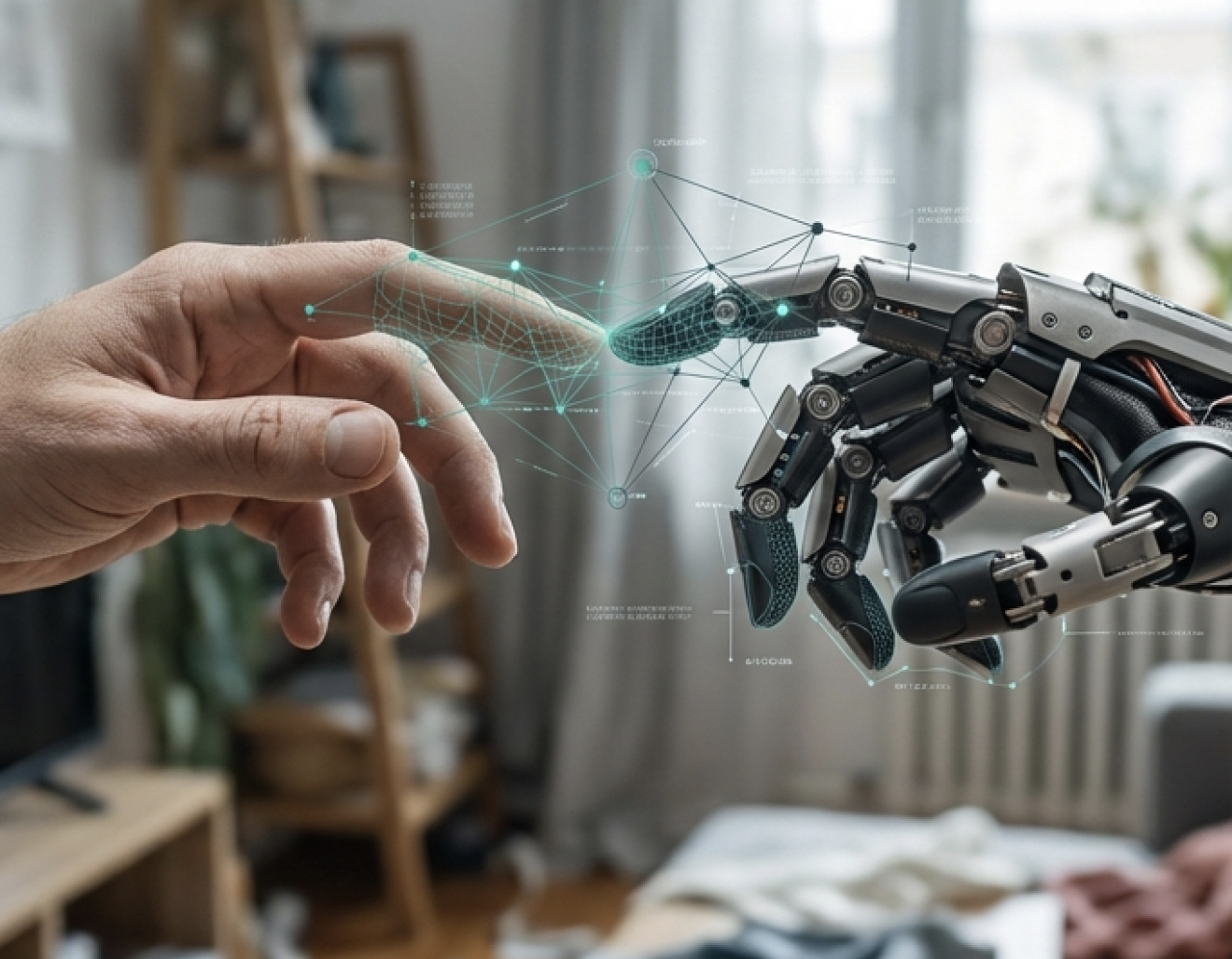
The same constraint binds training, only harder. A model learning open-world behavior needs many examples of intent, contact, sequence and outcome, captured in real environments and labeled by people who can say what the hand was trying to do and whether it worked. The internet does not contain that. Simulation can multiply it once you have it, but it cannot originate the ground truth about how a real object behaved when a real person moved it. This is the bottleneck in embodied intelligence: not architectures, which move quickly and travel freely, but physically grounded, task-annotated data.
That kind of record is produced rather than found, which means the work rests on trained and managed human capacity held to steady quality control. Through Flipside Digital Content Company, our Philippines-based operating subsidiary, we now own that capacity rather than renting it.1 Flipside specializes in structured data collection, human-in-the-loop judgment workflows, and rigorously quality-controlled curation pipelines.2 Across the field, groups that can hold an annotation standard steady across long runs of episodes end up with corpora other people can build on, while groups that cannot end up with footage.
Open-world testing is going to expose that difference faster than closed benchmarks ever did, because a loose standard shows up immediately as disagreement about whether the robot succeeded. I think that is healthy. The field has spent a few years comparing models on tests that flattered them, and the correction is arriving in the form of harder, messier, more honest report cards.
Stepping back, the shift I see is that the interesting scarcity has moved from the thing being graded to the grading itself, and to the recorded human judgment that makes grading possible at all. Models are becoming the easy half of this problem. What a robot knows about the physical world still has to be witnessed, written down and checked by people, and that careful work is what every model downstream ends up believing is true.
Sources
- Flipside AI: A Transformational Acquisition, 8-K, filed 2026-08-17
- (exhibit EX-99.1: PRESS RELEASE), 8-K, filed 2026-01-14
Disclosure
The following cautionary statement is reproduced from a Quarterly Report on Form 10-Q filed with the SEC.
Certain information included in this Quarterly Report on Form 10-Q and other filings of the Registrant under the Securities Act of 1933, as amended (the “Securities Act”), and the Securities Exchange Act of 1934, as amended (the “Exchange Act”), as well as information communicated orally or in writing between the dates of such filings, contains or may contain “forward-looking statements” within the meaning of Section 27A of the Securities Act and Section 21E of the Exchange Act. Forward-looking statements in this Quarterly Report on Form 10-Q, including without limitation, statements related to our plans, strategies, objectives, expectations, intentions and adequacy of resources, are made pursuant to the safe harbor provisions of the Private Securities Litigation Reform Act of 1995. Such statements are subject to certain risks, trends and uncertainties that could cause actual results to differ materially from expected results. Among these risks, trends and uncertainties are the availability of working capital to fund our operations, the competitive market in which we operate, the efficient and uninterrupted operation of our computer and communications systems, our ability to generate a profit and execute our business plan, the retention of key personnel, our ability to protect and defend our intellectual property, the effects of governmental regulation, and other risks identified in the Registrant’s filings with the Securities and Exchange Commission from time to time.