As one-stop platforms absorb the engineering work of training robots, the pace and the cost of a program settle onto the human operation that creates its data.
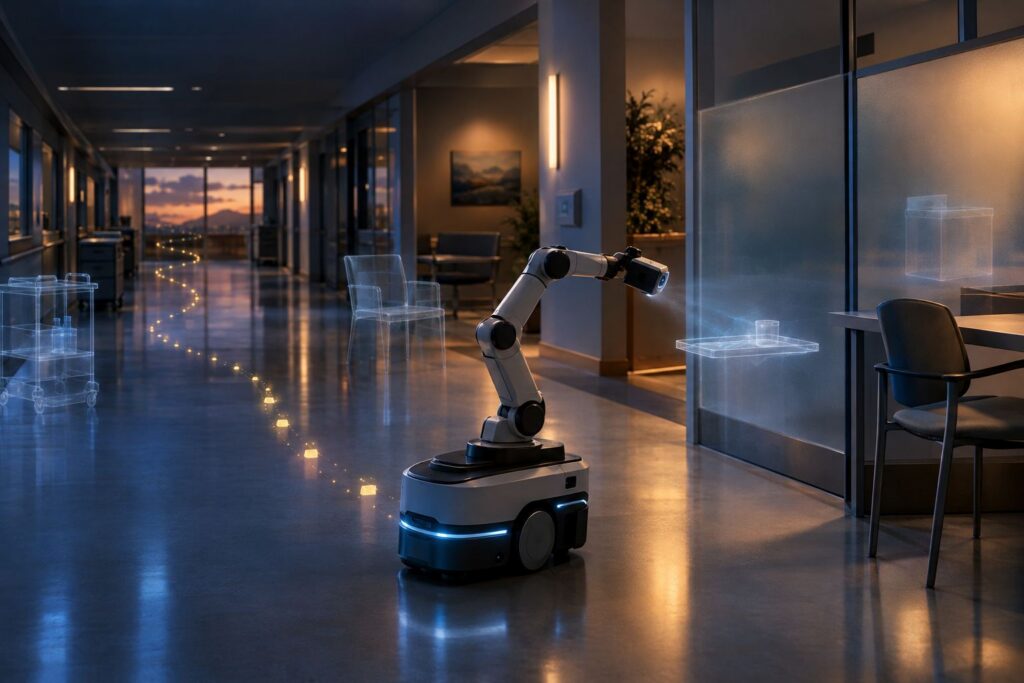
Every build has a pacing item: the one step that sets how fast everything else can move. In robotics that item has quietly changed hands, and the conversation has not entirely caught up. FluxVLA Engine, described by its authors as a one-stop engineering platform for vision-language-action work in embodied intelligence, is a useful prompt to ask where the slow step in a robot program actually sits now.
The authors report no headline score; their result is the platform itself, bringing the stages of vision-language-action engineering that teams normally stitch together from separate tools onto a single path. For someone building or backing robots, that is a sign the software side of a program is becoming a known quantity, and that the real differences between programs settle somewhere else.
The Slow Step Is Capture, Not Code
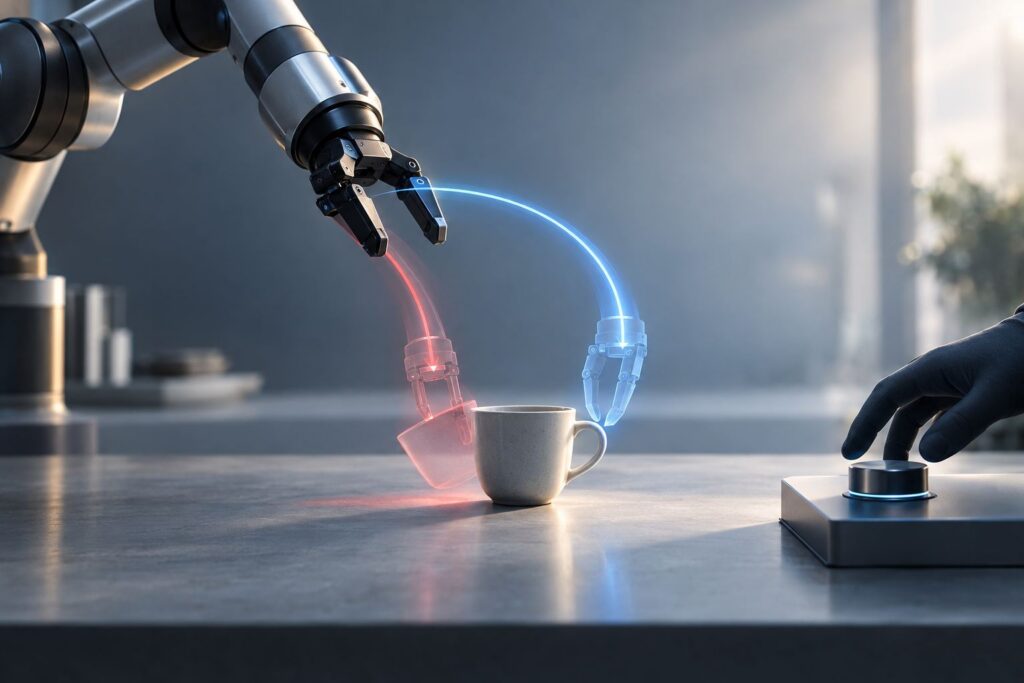
A vision-language-action model takes what a robot sees and what it has been told to do, and turns that into movement. Training one has historically meant assembling a stack of loosely related parts: capture tooling, simulators, loaders, training code, testing harnesses. When that stack collapses into one well-worn path, the training side of a program starts running on a weekly rhythm instead of a quarterly one.
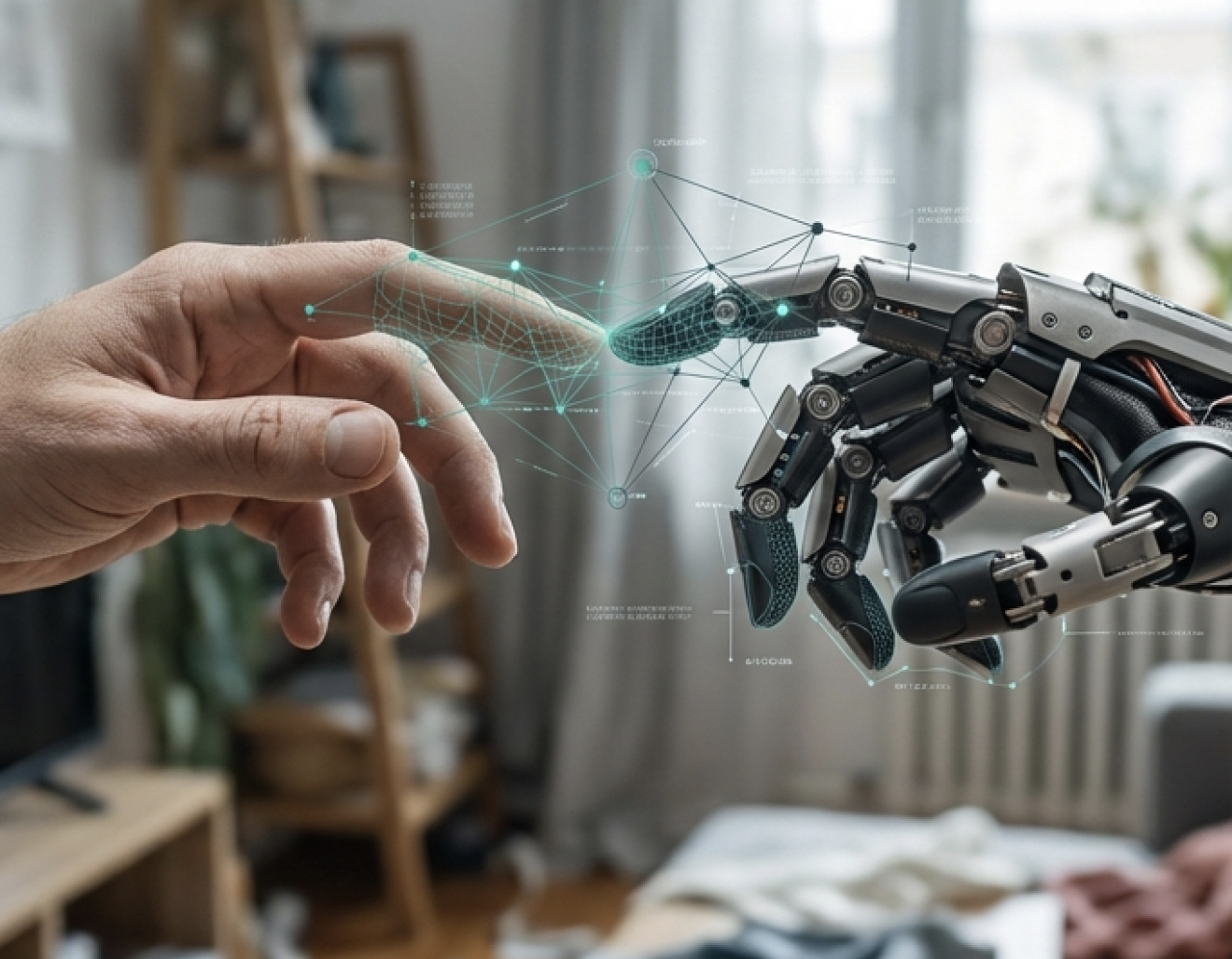
The supply of physical experience does not accelerate to match. A person demonstrating a task takes exactly as long as the task takes, and the room, the objects and the lighting all have to be set up first. I would watch the ratio between how fast a team can train and how fast it can capture, because better tooling usually widens that gap rather than closing it. To me, the most underrated line in a robotics budget is the fully loaded hourly cost of producing one usable record of a task done correctly.
What Is Actually Being Underwritten
Once the software path is a known quantity, the residual risk in a robot program stops resembling research risk. It starts resembling operations risk: recruiting, training time, keeping judgment steady across shifts and sites, equipment utilization, rework when a day of recordings turns out to be unusable. Those are the risks of running a production floor, and they are underwritten very differently from the risks of shipping software.
Meeting them takes trained, managed and quality-controlled human capacity that can hold to demanding production standards, and that capacity has to exist before anyone can commit to a delivery schedule. Through Flipside, we now own that capacity rather than renting it, together with established production pipelines, quality-management systems and institutional knowledge.1 We have secured engagements across humanoid robotics, autonomous mobility and autonomous vehicles over the past several months.2 Each of those three areas asks for different environments, different recordings and different judgments about what counts as a successful attempt, which is why capacity in one does not automatically convert into capacity in another.
The Part That Does Not Compress
Software iteration compresses almost without limit. Physical capture compresses only so far: you can run more sites in parallel, shorten setup, reuse rigs, standardize how a scene is dressed. The floor underneath all of that is the time a human being spends doing a task properly while a camera records it, and then the time another human spends deciding whether what was recorded is any good.
That is why I think the organizational layer matters more than the technical one at this stage. Scheduling, training, review, the discipline of agreeing what good looks like and holding that line across months: none of it photographs well, and all of it determines whether a program produces a thousand usable episodes a month or two hundred.
Robotics spent a decade treating the model as the interesting part, and the tooling around the model has caught up fast. What remains is the slower, more human business of producing physical experience task by task and judging it against a shared standard. The ground truth underneath a robot is made by people, and it is made at their pace.
Sources
- Flipside AI: A Transformational Acquisition, 8-K, filed 2026-08-17
- Building Our Leadership Team for Scale, 8-K, filed 2026-08-17
Disclosure
The following cautionary statement is reproduced from a Quarterly Report on Form 10-Q filed with the SEC.
Certain information included in this Quarterly Report on Form 10-Q and other filings of the Registrant under the Securities Act of 1933, as amended (the “Securities Act”), and the Securities Exchange Act of 1934, as amended (the “Exchange Act”), as well as information communicated orally or in writing between the dates of such filings, contains or may contain “forward-looking statements” within the meaning of Section 27A of the Securities Act and Section 21E of the Exchange Act. Forward-looking statements in this Quarterly Report on Form 10-Q, including without limitation, statements related to our plans, strategies, objectives, expectations, intentions and adequacy of resources, are made pursuant to the safe harbor provisions of the Private Securities Litigation Reform Act of 1995. Such statements are subject to certain risks, trends and uncertainties that could cause actual results to differ materially from expected results. Among these risks, trends and uncertainties are the availability of working capital to fund our operations, the competitive market in which we operate, the efficient and uninterrupted operation of our computer and communications systems, our ability to generate a profit and execute our business plan, the retention of key personnel, our ability to protect and defend our intellectual property, the effects of governmental regulation, and other risks identified in the Registrant’s filings with the Securities and Exchange Commission from time to time.