Physical AI is moving from demonstrations into production machinery, where the training data it needs does not exist until someone goes out and creates it.
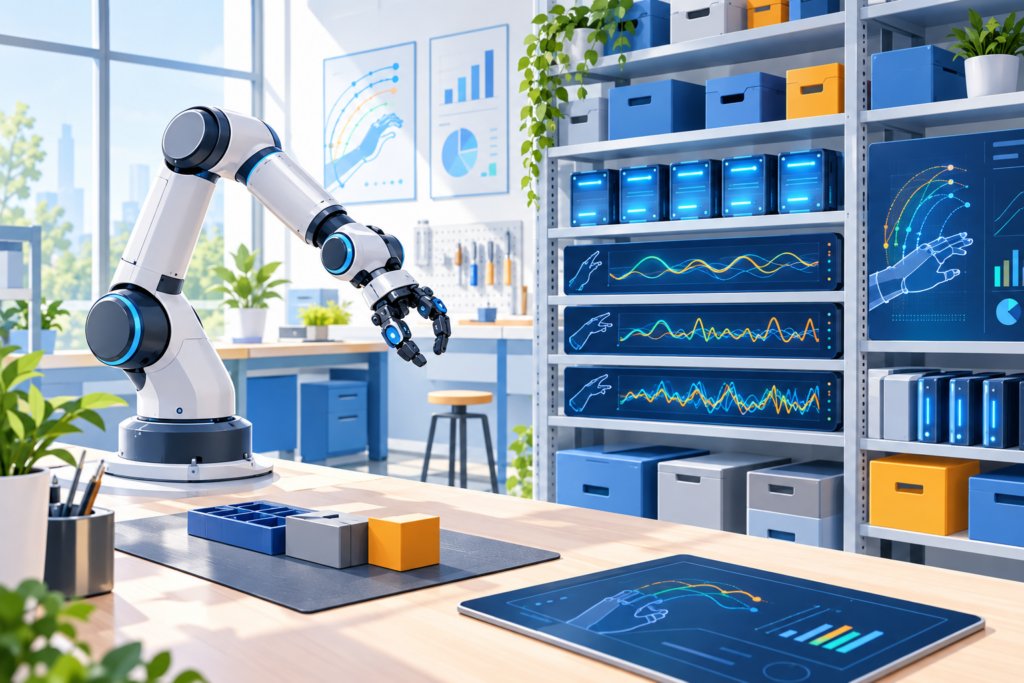
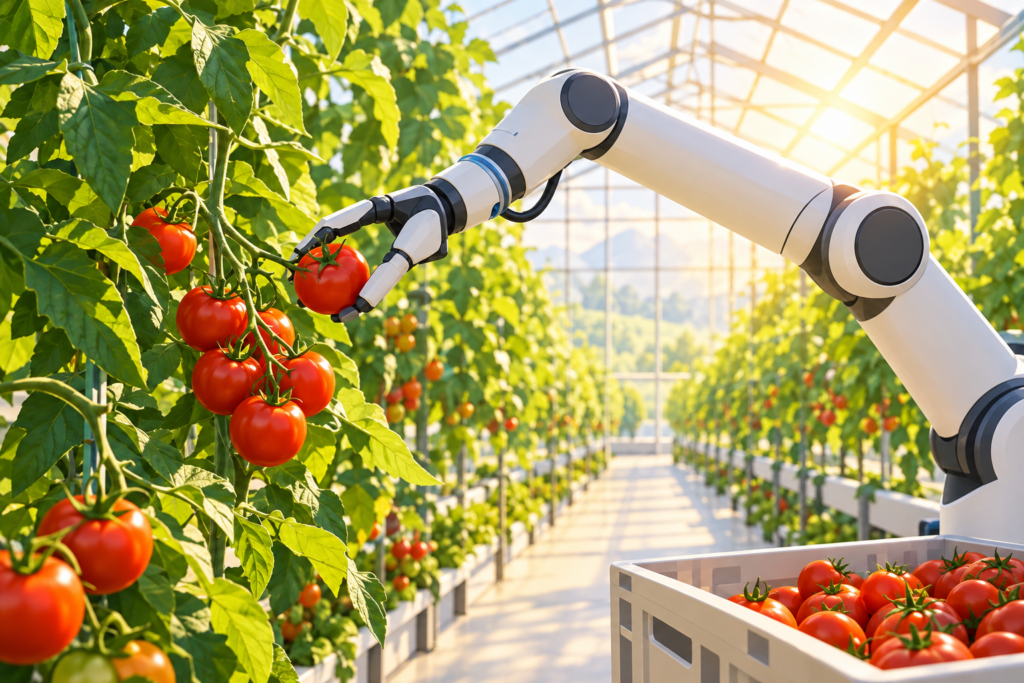
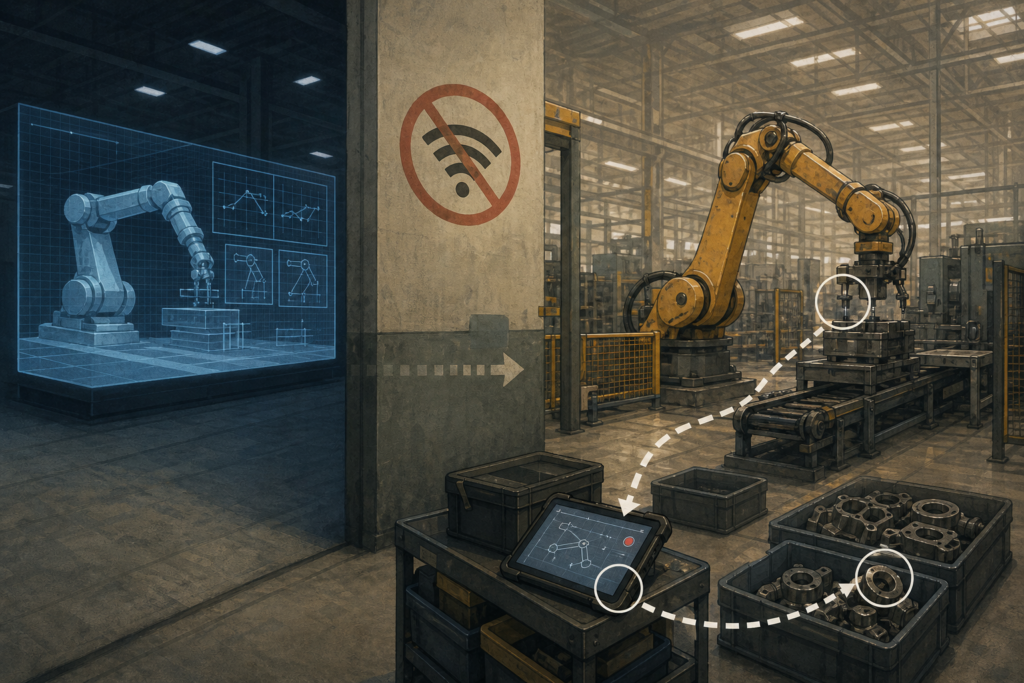
Most of what the public has seen of physical AI happens in a clean room with good lighting: an arm folding a shirt, a humanoid crossing a stage, a gripper pulling parts out of a bin for the camera. A stamping press running three shifts in a plant full of dust, heat and vibration is a different kind of problem, and it is the one industry actually pays to solve. Analog Devices has published a whitepaper on the challenges and opportunities in moving physical AI out of labs and into production machinery, and The Robot Report carried it this week.
The framing is worth sitting with, whatever you make of the conclusions. A language model inherited a library that humanity had already written down and published. A welding cell never wrote anything down.
Factories Never Wrote Their Data Down
Industrial machines generate enormous quantities of signal: vibration, current draw, temperature, acoustic texture, frames from inspection cameras. None of that is a training set. It is raw material with no indication of which moment mattered, what the machine was trying to do, or what should have happened next. The hour before a bearing starts to fail looks, to a file, exactly like the hour before it does not.
The notion of correct is also local in a way the internet never is. A veteran technician knows that this particular press sounds wrong on the return stroke, that this grade of steel behaves differently when the room is cold, that a given chatter is tolerable on one line and a scrap risk on another. That knowledge sits in people and in habit, not in storage. Any system that learns to act on production machinery has to be taught it deliberately, by someone who holds it.
A Signal Is Not Yet A Label
Turning a sensor stream into supervision means a human decides, moment by moment, what the machine was doing and whether it did it well. It means clocks that agree across sensors and cameras, so a sound and an image refer to the same instant. It means two people looking at the same recording and reaching the same judgment, because a model trained on inconsistent judgments learns the inconsistency.
I think the hardest problem in industrial physical AI is not perception, and it is not control. It is agreement on what a good outcome looks like, written down precisely enough that a machine can be graded against it. I find the lab-to-floor language a little misleading for that reason, because it suggests a transfer when what is really required is a fresh body of evidence gathered where the machinery lives. I would watch how teams handle fleets of nominally identical machines that are not identical at all, since that is where thin data quietly stops generalising.
Capacity Is The Constraint
If the data has to be manufactured rather than found, the question stops being clever and starts being operational: who can capture, annotate and quality-check it to the same standard, week after week, at the volumes advanced systems consume. That is trained, managed, quality-controlled human capacity, and it is slow to build. Through Flipside, we now own that capacity rather than renting it, together with established production pipelines, quality-management systems, institutional knowledge, and a client roster that had already validated the organization’s capabilities.1
For a non-technical reader trying to follow where the value sits in this field, that is the useful mental picture. Chips and models are being built by very capable people and are improving in public view. The grounded record of how physical work actually goes, labelled by someone who understands the work, is being built far more slowly and in far fewer places.
The race to make AI physical gets described as a contest between models and silicon, which is the part that photographs well. I think it is mostly a race in evidence, and the field is only beginning to be honest about how little of that evidence exists for the machinery that already runs the economy. The teams that take the unglamorous half seriously, capturing real operations carefully and labelling them consistently, are the ones whose systems behave the same on a Tuesday afternoon in a hot plant as they did in the demonstration.
Sources
- Flipside AI: A Transformational Acquisition, 8-K, filed 2026-08-17
Disclosure
The following cautionary statement is reproduced from a Quarterly Report on Form 10-Q filed with the SEC.
Certain information included in this Quarterly Report on Form 10-Q and other filings of the Registrant under the Securities Act of 1933, as amended (the “Securities Act”), and the Securities Exchange Act of 1934, as amended (the “Exchange Act”), as well as information communicated orally or in writing between the dates of such filings, contains or may contain “forward-looking statements” within the meaning of Section 27A of the Securities Act and Section 21E of the Exchange Act. Forward-looking statements in this Quarterly Report on Form 10-Q, including without limitation, statements related to our plans, strategies, objectives, expectations, intentions and adequacy of resources, are made pursuant to the safe harbor provisions of the Private Securities Litigation Reform Act of 1995. Such statements are subject to certain risks, trends and uncertainties that could cause actual results to differ materially from expected results. Among these risks, trends and uncertainties are the availability of working capital to fund our operations, the competitive market in which we operate, the efficient and uninterrupted operation of our computer and communications systems, our ability to generate a profit and execute our business plan, the retention of key personnel, our ability to protect and defend our intellectual property, the effects of governmental regulation, and other risks identified in the Registrant’s filings with the Securities and Exchange Commission from time to time.