Physical AI’s concepts and methods now circulate freely, which pushes the real difference between systems upstream, into grounded data that nobody can download.
Physical AI has reached the stage where it can be taught. Ask several teams building robots what the problem actually is and the answers rhyme: a machine has to read a scene, work out what it has been asked to do, and produce motion that survives contact with a world that never quite matches the description. The vocabulary has settled, survey literature is arriving, and the methods travel between groups within weeks.
That is what a maturing field looks like, and it moves the hard part somewhere else. When everyone can read the same architecture, download the same open weights and reproduce the same demonstration, the thing separating a video from a deployed system stops being the idea. It becomes what the system was trained on.
Shared Concepts, Private Corpora
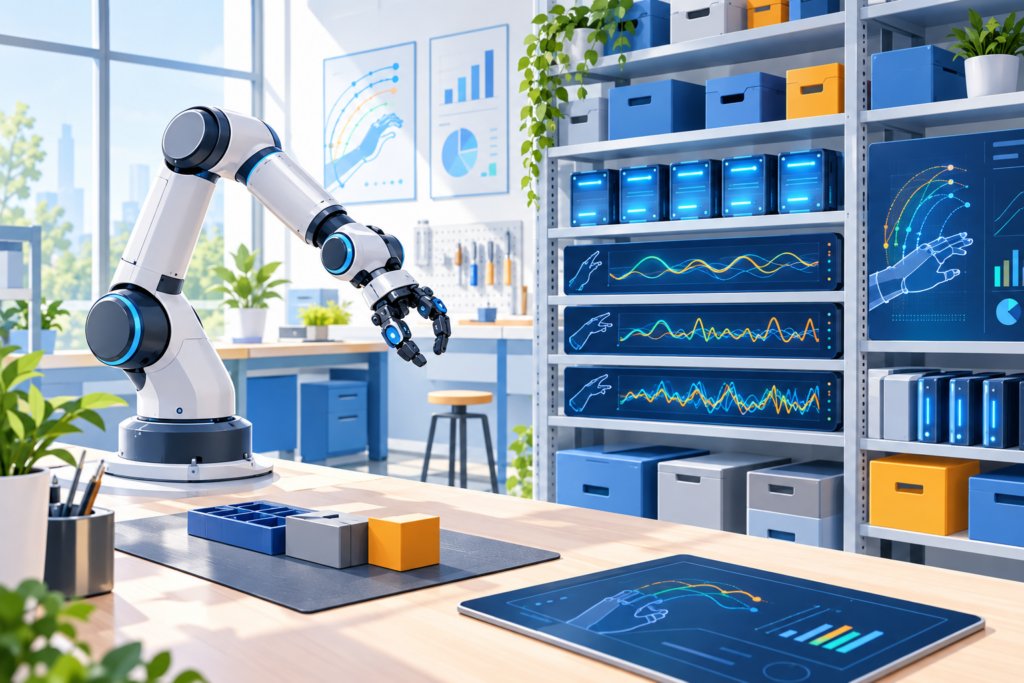
Think about what is genuinely public in this field today. The concepts are public, because they are written down in tutorials and course notes. The techniques are public, because researchers publish them and release code to prove the claims. Even the hardware is becoming ordinary, with arms and humanoid platforms available to any lab with a budget. What stays private is the recording of real behavior: the hours of grasping, walking, wiping, stacking and failing, captured with calibrated sensors and marked up by people who agreed in advance on what each moment meant.
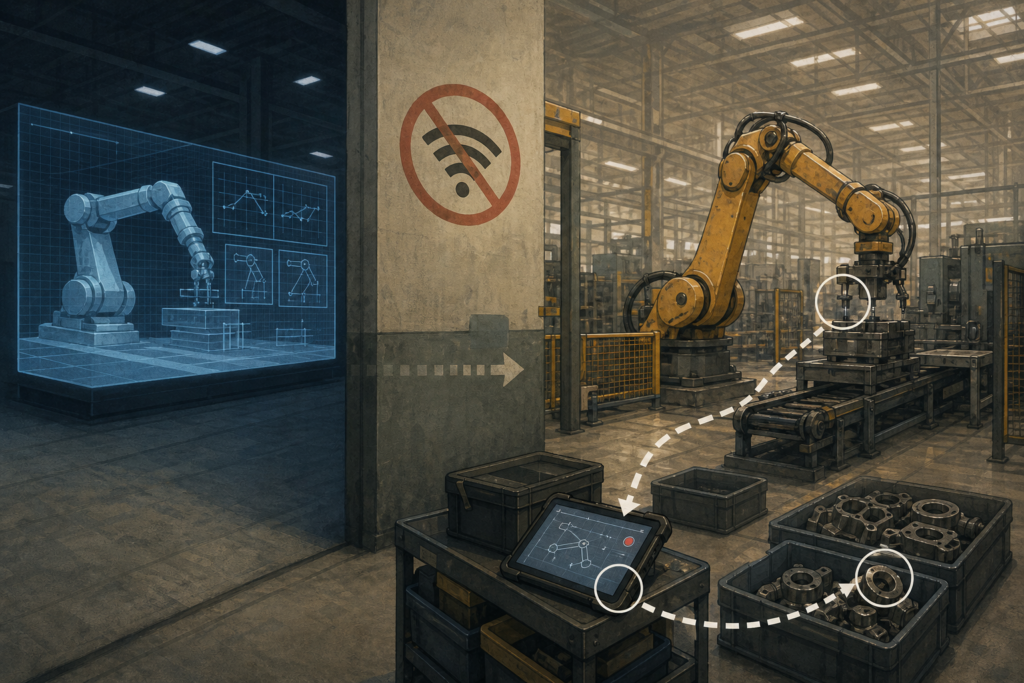
I think the most useful way to read any overview of this field is to skip ahead to the part listing the open challenges. Almost none of them turn out to be challenges about model design. They are challenges about contact, about lighting that changes at four in the afternoon, about whether the task counted as finished, about why a policy that works in one building fails in the next one. To me, that list is a description of missing data far more than it is a description of missing mathematics.
The Challenge Column Is Mostly A Data Column
Here is why those challenges resist the usual fix. Text and images could be scraped because humans had already produced them and put them somewhere. Physical behavior was never written down. A forklift bay, a hospital corridor and a kitchen counter have generated trillions of useful moments, and essentially none of them were recorded in a form a model can learn from. The data does not exist in a warehouse waiting to be licensed. It has to be created on purpose, in the physical world, by someone willing to run the camera and then do the unglamorous work of saying what happened.
That second half is the part people underestimate. A video of an arm reaching for a cup teaches very little until a human has marked the frame where contact began, the frame where the grip slipped and the judgment that the attempt was poor, and until a thousand other people have made that same judgment the same way. Quality here is not a nice-to-have. Inconsistent annotation does not merely slow a model down, it teaches the model something false about the world.
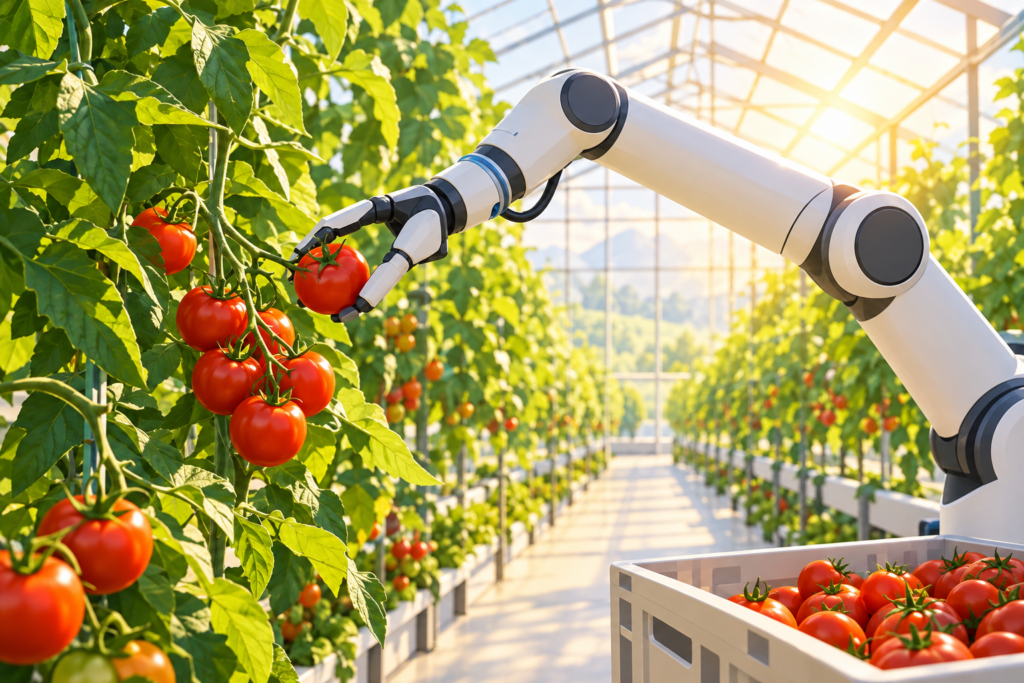
This is the layer where capability is being contested rather than invented, and it shows up across applications that look unrelated from the outside. Our work supports a US-based global technology platform’s autonomous-mobility programs through computer-vision annotation.1 Humanoid manipulation, driving and industrial automation ask for different modalities and different quality standards, yet each one hits the same wall: the model is ready before the ground truth is.
Where The Advantage Settles
I would watch, in any claim a robotics team makes this year, how much of the write-up describes how the data was captured. When a group is specific about sensor calibration, about who labeled what and about how disagreements between annotators were resolved, I tend to believe the result. When the data section is a sentence long and the architecture section runs three pages, I read the demo as a demo. Testing in this field is still mostly a matter of trusting what was fed in, which makes provenance the closest thing the field has to a quality guarantee.
What I find overrated is the assumption that scale alone resolves this. More hours of badly specified recording give you a bigger pile of ambiguity. What I find underrated is how much of the eventual advantage sits with whoever can run collection and human judgment at production standards, repeatably, in the same way on Tuesday as on Friday.
The honest summary of physical AI right now is that its concepts are settled, its techniques are shared, and its challenges are overwhelmingly about the physical record nobody has made yet. That is an unusual position for a technology field, and I think it is good news for anyone who prefers problems with known shapes. The machines are not waiting on a smarter idea. They are waiting on a faithful description of the world they have to work in.
Sources
- Expanding Data Infrastructure for Autonomous Mobility, 8-K, filed 2026-08-17
Disclosure
The following cautionary statement is reproduced from a Quarterly Report on Form 10-Q filed with the SEC.
Certain information included in this Quarterly Report on Form 10-Q and other filings of the Registrant under the Securities Act of 1933, as amended (the “Securities Act”), and the Securities Exchange Act of 1934, as amended (the “Exchange Act”), as well as information communicated orally or in writing between the dates of such filings, contains or may contain “forward-looking statements” within the meaning of Section 27A of the Securities Act and Section 21E of the Exchange Act. Forward-looking statements in this Quarterly Report on Form 10-Q, including without limitation, statements related to our plans, strategies, objectives, expectations, intentions and adequacy of resources, are made pursuant to the safe harbor provisions of the Private Securities Litigation Reform Act of 1995. Such statements are subject to certain risks, trends and uncertainties that could cause actual results to differ materially from expected results. Among these risks, trends and uncertainties are the availability of working capital to fund our operations, the competitive market in which we operate, the efficient and uninterrupted operation of our computer and communications systems, our ability to generate a profit and execute our business plan, the retention of key personnel, our ability to protect and defend our intellectual property, the effects of governmental regulation, and other risks identified in the Registrant’s filings with the Securities and Exchange Commission from time to time.